


TL;DR
x1 examples are native iOS apps, built in Swift and Xcode, that go from a plain-English idea to a live App Store listing inside one AI studio. Unlike most AI app builders that output web apps or React Native code, x1 produces production-ready iPhone apps you fully own. This article walks through concrete app categories, the studio workflow behind each example, and what separates these apps from throwaway AI demos.
The phrase “show me what it does” carries more weight than any feature list. When people search for x1 examples, they want proof: what kinds of apps can x1 actually produce, and are they real enough to ship?
The answer matters because the AI app builder space is full of tools that generate impressive first impressions but fall apart the moment you try to change a screen or submit to the App Store. x1 takes a different approach, and the examples that come out of it reflect that difference.
Direct Answer: What Are X1 Examples?
X1 examples are real native iOS apps built in Swift and Xcode using the X1 AI app studio. Users describe an app in plain English, and X1 generates a production-ready iPhone app that can be submitted to the App Store. Unlike most AI app builders that create web or React Native apps, X1 outputs fully native iOS projects that developers can own, edit, and ship.
What Are X1 Examples?
X1 examples are real native iOS applications built inside the X1 AI app studio. Instead of producing web apps or cross-platform frameworks, X1 generates Swift and Xcode projects that can be compiled, tested, and submitted directly to the App Store.
These apps are created from plain-English prompts and go through structured stages—planning, design, build, launch, and iteration—resulting in production-ready mobile applications rather than prototypes or demos.
X1 Examples at a Glance (Quick Summary Table)
This improves:
skimmability
AI extraction
SERP “people also ask” answers
Copy/Paste Table:
Category | Example App Type | Why It Works | Monetization Potential |
|---|---|---|---|
Wellness | Focus timers, habit trackers | Simple core loop + daily use | High (subscriptions) |
Productivity | Calculators, converters | High intent search traffic | Medium–High |
Education | Study apps, flashcards | Recurring student usage | High |
Creator tools | Companion apps | Audience-driven demand | High |
B2B micro-tools | Invoice or CRM tools | Problem-solving niche tools | Very High |
Why People Search for X1 Examples
Why this matters:
People searching “x1 examples” are usually trying to validate:
Can this tool actually build real apps?
Are there App Store apps or just demos?
What can I realistically ship?
Key intent breakdown:
Proof of real apps
App Store readiness
Comparison with other AI builders
Monetization potential
Categories of Apps You Can Build with x1
The best way to understand x1 examples is through the types of apps people are building. Each category below represents a pattern that works well for solo developers and small teams, which make up the largest segment at 42% of the iOS developer community.
Wellness and Focus Apps
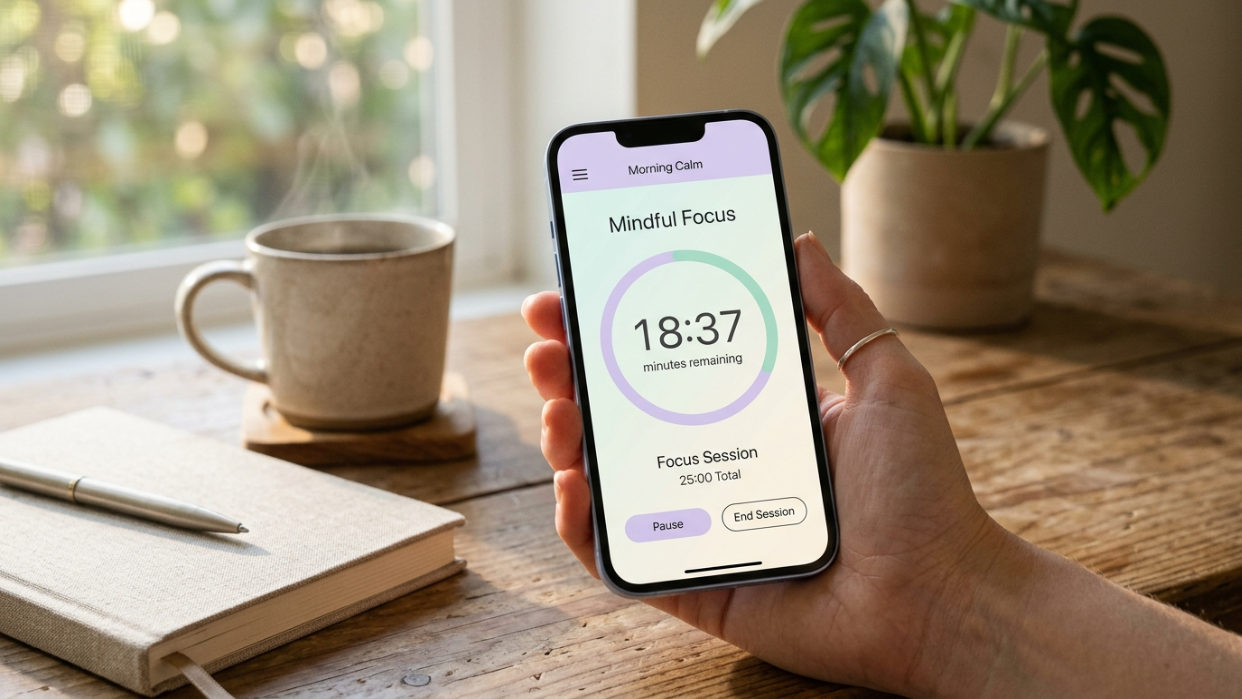
Focus timers, meditation trackers, screen-time reduction tools, and habit-breaking apps are a natural fit. The x1 technologies App Store page already shows apps in this space, including a focus discipline tool and a screen-time reduction app with gamified elements like a pixel companion that grows as you stay off distracting apps.
Why this category works: the core mechanic is simple (a timer, a blocker, a daily tracker), the audience is large, and subscription monetization fits naturally. x1’s Plan studio maps the screens (onboarding, timer, stats dashboard, paywall) while the Design studio handles the visual identity, all before a single line of Swift is generated.
Productivity and Utility Apps
Utility apps like file converters, calculators, unit converters, and QR code generators remain among the most downloaded categories on the App Store. Users search for these apps when they have an immediate need, and good App Store optimization drives consistent organic downloads.
x1 examples in this category might include a niche calculator (say, for freelance tax estimates), a Markdown editor, or a time-zone converter for remote teams. The modular build process means you can ship a focused v1 and add features incrementally without breaking the app’s architecture.
Curious what building one looks like? Explore x1’s pricing to see how the tiers map to different build speeds and capacities.
Education and Study Tools
The x1 technologies developer page includes an AI-powered study and homework assistance app, showing this category is already proven ground. Students are a monetizable audience, particularly for subscription-based tools that offer ongoing value like spaced repetition, flashcard generation, or assignment tracking.
What makes x1 particularly useful here is the built-in revenue modeling. Before you write a single screen description, x1 helps you model your app’s revenue potential with real data, from user growth to paid conversion to monthly recurring revenue. That’s unusual for a builder tool and critical for anyone trying to validate whether a study app’s subscription math actually works.
Content and Social Companion Apps
Creators and influencers increasingly want their own mobile touchpoint, something beyond a link-in-bio page. A companion app might offer exclusive content, a community feed, or a toolkit related to the creator’s niche (workout plans, recipe collections, photography presets).
x1 examples in this space benefit from the Brand studio, which generates a complete visual identity (icon, colors, fonts, overall look), and the Launch studio, which creates App Store screenshots and listing copy without requiring separate design tools.
B2B Micro-Tools
This is where practitioners on Reddit consistently point to opportunity. Invoice generators, expense trackers, CRM tools, and industry-specific utilities have less competition than consumer apps and attract users willing to pay for time savings. A simple invoicing app for freelance photographers, or a client check-in tracker for personal trainers, can find a profitable niche without needing millions of downloads.
The ownership angle matters especially here. x1 generates actual Swift code in an actual Xcode project. You own it. You can hire a developer to extend it. You can leave x1 entirely. For a B2B tool that might evolve into a company’s core product, that ownership is non-negotiable.
What Makes x1 Examples Different from Other AI-Built Apps
Native Swift and Xcode Output
This is the core differentiator and it deserves plain language: most AI app builders do not produce native iOS apps.
Rork uses React Native and Expo, and its deployment still requires technical knowledge for App Store publishing, including manual handling of certificates, signing, and submission. Newly AI also uses React Native on Expo, not native Swift. Google’s AI Studio targets Android only, and the resulting creations are limited to personal use. FlutterFlow exports Flutter and Dart code, which is cross-platform but not native Swift.
x1 examples are Swift and Xcode from the ground up. This means better performance on Apple hardware, access to the full range of iOS APIs, and an output that any Swift developer could pick up and extend.
Coherent Architecture Instead of One-Shot Generation
x1’s own team describes the problem directly: most AI builders generate surface-level apps, then disappear, leaving you with something you can’t edit, extend, or trust.
Reddit users who have tested multiple AI development tools echo this. One practitioner noted that while some tools generate native-looking apps, the AI often struggles to interpret user requirements accurately for anything beyond basic functionality. Complex features break, and there’s no structured way to fix them.
x1 addresses this with a staged workflow. Instead of dumping everything into a single prompt, it sequences the build through distinct studios. Each stage produces output that feeds cleanly into the next. The result is an app with coherent architecture rather than a pile of generated code that falls apart when you change one screen.
For a deeper look at how this philosophy shapes the product, the x1 blog covers the thinking behind structured AI-assisted building.
How a Typical x1 Example Goes from Idea to App Store
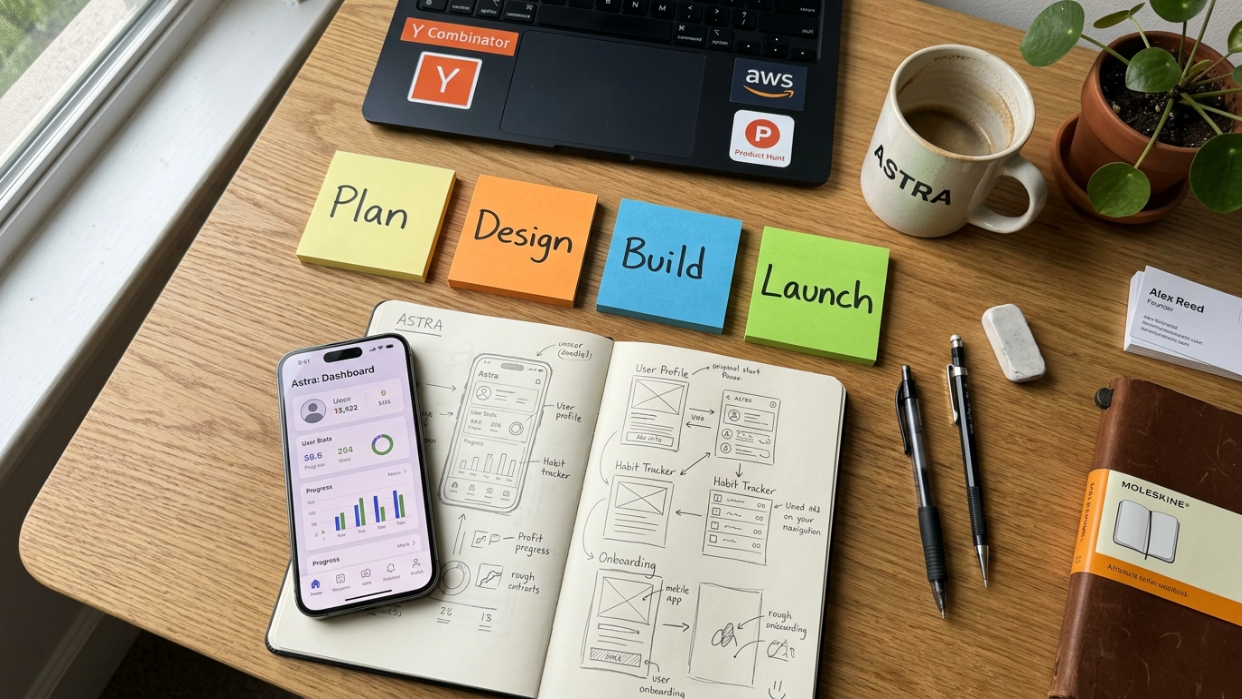
Here’s what the five-stage studio workflow looks like in practice, using a hypothetical daily journaling app as the example.
1. Plan
You describe the app: “A simple daily journal where users write one entry per day, tag their mood, and see a weekly mood chart.” x1 maps the screens (onboarding, journal entry, history view, mood chart, settings, paywall) and defines how features interact: taps, saves, subscription gating, and return states.
2. Design
You set the visual style. Pick an icon direction, choose colors and fonts, and shape the overall look. Then you edit individual screens, adjusting layouts, button placement, spacing, and copy. This happens before any code exists, which means design changes don’t trigger expensive refactors later.
3. Build
x1 generates the Swift and Xcode project screen by screen, with live previews along the way. You can test the app and fix issues inside the studio, getting it launch-ready without switching to a separate development environment.
4. Launch
Create App Store screenshots, write the listing copy (title, subtitle, description, keywords), and submit for App Review. All of this happens inside x1. The last-mile friction that kills many indie apps (screenshot generation, metadata formatting, submission flow) is handled in one place.
5. Iterate
After launch, you refine based on user feedback. The staged architecture means you can update individual screens or add features without destabilizing the rest of the app.
Check out the latest updates to see how the studio workflow continues to evolve.
Who’s Building with x1
The market context matters. According to Gartner, 75% of new applications will be built using low-code or no-code tools by the end of 2026. The low-code platform market is projected to grow from roughly $29 billion in 2026 to around $264 billion by 2032. The demand for tools like x1 is structural, not a trend.
Within that market, x1 examples tend to come from a few distinct groups:
Indie makers shipping their first iOS app. Solo developers are the largest segment of the iOS community, and x1’s guided workflow removes the Xcode learning curve without sacrificing native output.
Non-technical founders validating an MVP. Instead of hiring a development agency for $30,000 and waiting three months, a founder can build and ship a testable native app in a fraction of that time and cost.
Designers who want to go from concept to real code. x1’s Design studio speaks their language (layouts, spacing, typography), and the Build studio translates it into Swift without requiring them to learn SwiftUI.
Small agencies accelerating native iOS delivery for clients. The Xcode project output means agency developers can take over and extend the codebase after x1 handles the initial build.
The vision behind all of this is what x1 calls the one-person unicorn era, where a single person with a good idea and the right tools can build, launch, and grow a real software business.
Getting Started with Your Own x1 Example
x1 offers approximately 100 free credits to try the product, enough to explore the workflow and build out a feature. If you’re serious about shipping, the Builder plan starts at $99 per month (or $66 per month billed yearly), with Pro and Max tiers offering faster build speeds and higher capacity.
The easiest way to understand x1 examples is to make one yourself.
See x1’s plans and pricing to find the tier that fits your project.
X1 vs Other AI App Builders
Tool | Output Type | Native iOS | App Store Ready | Code Ownership |
|---|---|---|---|---|
X1 | Swift + Xcode | ✅ Yes | ✅ Yes | Full ownership |
Rork | React Native | ❌ No | ⚠ Partial | Limited |
FlutterFlow | Flutter | ❌ No | ⚠ Manual setup | Partial |
Bolt / Lovable | Web apps | ❌ No | ❌ No | No |
FAQ
What exactly is an x1 example?
An x1 example is a native iOS app built inside x1’s AI app studio. It starts as a plain-English description and ends as a Swift and Xcode project ready for the App Store. The term covers both the showcase apps published by x1 technologies and the broader categories of apps the platform is designed to build.
Does x1 produce real native apps or web wrappers?
Real native apps. x1 generates Swift code in an Xcode project, not HTML in a WebView, not React Native, not Flutter. This is the primary technical difference between x1 examples and what most other AI app builders produce.
What types of apps work best as x1 examples?
Wellness and focus apps, productivity utilities, education tools, content creator companion apps, and B2B micro-tools are all strong categories. Apps that solve one problem well and target a specific audience tend to perform best, both on the platform and in the App Store.
Can I modify the code x1 generates?
Yes. You receive a full Xcode project with Swift source code. You can edit it yourself, hand it to a developer, or continue iterating inside x1. There’s no lock-in to the platform.
How does x1 compare to tools like Rork or FlutterFlow?
Rork outputs React Native/Expo code and requires manual handling of App Store certificates and submission. FlutterFlow exports Flutter and Dart for cross-platform builds. x1 is iOS-only and produces native Swift, with App Store launch assets and submission built into the workflow.
Do I need to know Swift or Xcode to use x1?
No. The studio workflow is designed for non-technical users. You describe what you want in plain English, make visual design choices, and x1 handles the code generation. That said, knowing Swift gives you more control over customization after the build.
How much does x1 cost?
The Builder plan is $99 per month ($66 per month if billed yearly). Pro is $199 per month and Max is $299 per month, each offering increased build capacity and speed. x1 also provides around 100 free credits to try the platform before committing.
Are there real apps on the App Store built with x1?
The x1 technologies developer page on the App Store lists published apps including focus and wellness tools and an AI study assistant. These are live, reviewed apps available for download, not just prototypes or demos.